


Just a few kilometers from Hotel Weis stands one of the most fascinating structures of antiquity: the Porta Nigra in Trier. This impressive city gate is the landmark of the city and part of the UNESCO World Heritage. Surrounded by massive sandstone blocks and millennia-old history, one is immediately transported back to the time of the Romans – a place where the past comes alive.
Porta Nigra Trier
Experience the landmark of the Roman city with Hotel Weis
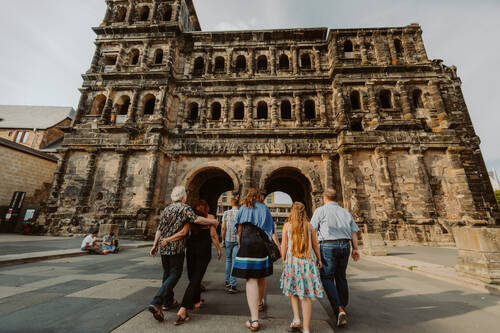
The Porta Nigra – Black Gate and Symbol of Trier
The Porta Nigra – Latin for "Black Gate" – was built around 170 AD and was once part of the Roman city wall of Trier. It owes its name to the dark sandstone, which over the centuries has acquired its typical color due to wind, weather, and time.
Today, it stands in the heart of Trier – a fascinating structure that captivates visitors from all over the world with its massive structure and intriguing history.
A Glimpse into History
Originally, the Porta Nigra was the northern city gate of the Roman city of Augusta Treverorum, today's Trier. Many centuries later, the Greek monk Simeon found refuge here and lived within the walls of the gate until his death. In his honor, the Porta Nigra was then converted into a church – an exciting chapter in its long history.
Only in the 19th century did Napoleon have the later additions removed to make the Roman original visible again. Since then, the Porta Nigra has appeared almost as it did over 1,800 years ago.
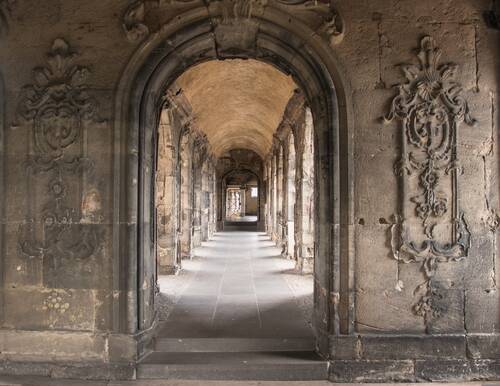
Architecture that Tells a Story
With its massive sandstone blocks, two tall towers, and imposing arches, the Porta Nigra still demonstrates how impressive Roman architecture was. Particularly fascinating: the entire structure was built without mortar – the stones hold together solely by their weight and iron clamps.
Those who explore the Porta Nigra from the inside can climb narrow stairs to the upper floors and are rewarded with a magnificent view over the old town of Trier – a moment that uniquely connects history and scenery.
Visitor Information – Porta Nigra Trier
The Porta Nigra is open year-round:
- March: daily from 09:00 AM – 05:00 PM
- April to September: daily from 09:00 AM – 06:00 PM
- October: daily from 09:00 AM – 05:00 PM
- November to February: daily from 09:00 AM – 04:00 PM
Note: On October 27, the Porta Nigra closes at 03:30 PM due to a major event in the square.
The last admission is 30 minutes before closing.
Those who visit the Porta Nigra experience the landmark of the city of Trier up close – an impressive piece of Roman history.
Here you can find the current entrance prices (as of 2025):
| Adults | €6.00 |
| Reduced price for adults* | €5.00 |
| Children/Youth (6-18 years) | €3.00 |
| Children under 6 years | free admission |
| Families 1** | €6.00 |
| Families 2*** | €12.00 |
| Adults in groups**** (from 10 persons) | €5.00 |
| Children/Youth in groups**** (from 10 persons, up to 18 years) | €3.00 |
* The discount applies to students over 18 years, students, trainees, volunteers, retirees, unemployed persons, and persons with disabilities (each with proof).
** 1 adult with up to 4 children aged 6 and over
*** 2 adults with up to 4 children aged 6 and over
**** Group tickets must be purchased together by one person (tour guide / supervisor).
The outdoor area of the Porta Nigra is accessible. However, access to the upper floors is via stairs, so the interior is unfortunately not fully accessible for wheelchair users. There is informational material and digital offerings on-site to experience the history without having to ascend.
The Porta Nigra is located in the center of Trier and is easily accessible on foot, by car, or by bus. Visitors arriving by car can use the nearby parking garages 'Domfreihof' or 'City-Parkhaus'. It is only about a 10-minute walk from Trier main station or a short ride on bus lines 1, 5, or 30 to the 'Porta Nigra' stop.
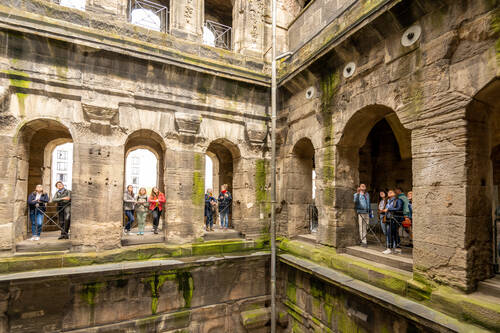
Visitor Experience in the City of Trier
A visit to the Porta Nigra is more than just a quick stop – it is the centerpiece of any trip to Trier.
Inside, exciting guided tours and small experience tours await, bringing history to life. From the upper floors, you can enjoy an impressive view over the rooftops of the city, and modern light and multimedia installations tell the story of the gate in a whole new way.
Those who want to dive even deeper into the Roman past should also visit the amphitheater, the imperial baths, and the Basilica of Constantine – all just a few minutes apart and perfectly connected.
More Highlights in Trier
The Porta Nigra is just the beginning – Trier has many cultural treasures to offer:
- the Imperial Baths, one of the largest bathhouses of the Roman Empire
- the Trier Cathedral, the oldest bishop's church in Germany
- the Roman Bridge, the oldest bridge in Germany still in use today
- the Amphitheater, where gladiators once fought
- the Constantine Basilica, once the emperor's audience hall
All attractions can be wonderfully combined for a day trip – your starting point: Hotel Weis.
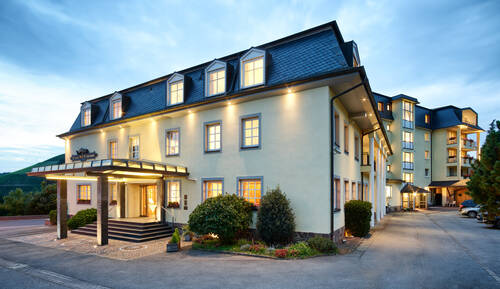
Stay at Hotel Weis – Your Retreat After a Day in Trier
After an eventful day in Trier, Hotel Weis in Mertesdorf invites you to arrive and feel at home. Surrounded by vineyards, regional cuisine, and loving details, you will find the perfect place to unwind.
Whether for a short vacation, a weekend for two, or a cultural discovery tour – Hotel Weis is the ideal starting point to experience Trier and the Porta Nigra up close.
From Hotel Weis to Porta Nigra – Short Distances to Roman Heritage
Nestled in the vineyards of the Ruwer Valley, Hotel Weis is peaceful, idyllic, and yet only about 15 minutes from the Porta Nigra in Trier. Whether you are arriving by car or planning a trip by bus or train – from here, you can easily reach the sights of Germany's oldest city.
After a day full of impressions, Hotel Weis offers just the right thing: warm hospitality, cozy comfort, and regional cuisine that makes your stay special.